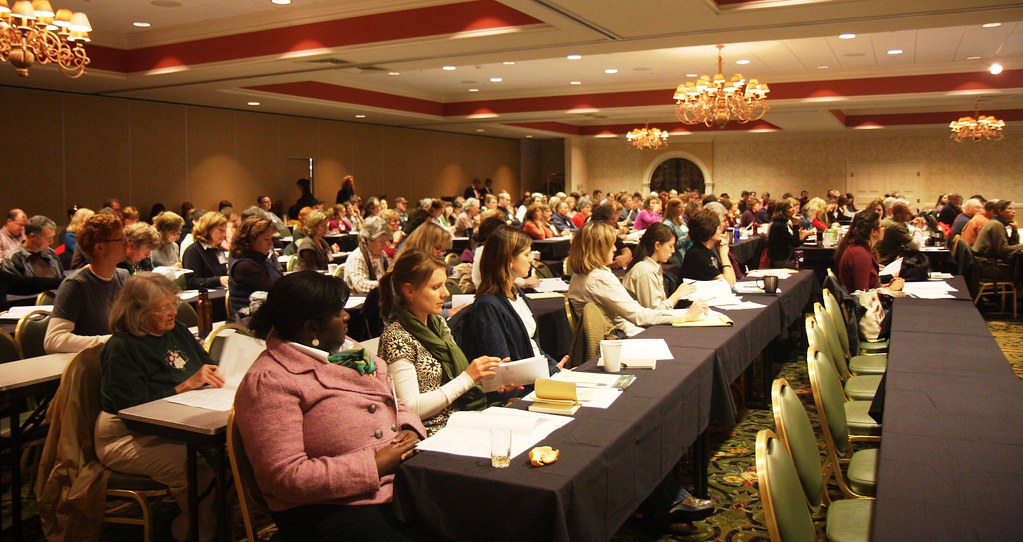
In a time that has felt anything but normal we dedicate the 2021 Turning a New Leaf conference to “Planting a New Normal” , highlighting collaborations that normalize sustainable practices and ensure diversity, equity, inclusion, and justice.
We believe that landscape professionals have a unique opportunity to effect positive change in the Chesapeake Bay region- a task best achieved when we work together.
The conference was held virtually December 8-9, and was followed by in-person field days in Maryland, Pennsylvania, and Virginia on December 10.
The 2021 Marcy Damon Conservation Landscaping Award winner is Suzanne Kilby Etgen. Suzanne Etgen is the founding Executive Director of the Anne Arundel Watershed Stewards Academy, headquartered in Millersville, Maryland. The Watershed Stewards Academy mission is to train and mobilize community leaders to drive change for sustainable landscapes and clean waters, and Etgen has helped forge strong connections between stewards and landscape professionals in the Annapolis area. She holds a BS in Environmental Science and a MA in Religion and Ecology, and she is also a trained Community Based Social Marketing Technical Assistance Provider, assisting Stewards and organizations in the development of campaigns to change polluting behaviors. Etgen served for several years on the CCLC board of directors and played an instrumental role in establishing CCLC’s Chesapeake Bay Landscape Professional certification and training program. She has been recognized for her work with numerous other awards.
Day 1 – Wednesday, December 8, 2021
Session 1. Meaningful Collaborations in Sustainable Landscaping
Panelists will share three different perspectives on how collaborations can strengthen our efforts to improve water quality and habitat in the Bay region and improve working conditions for those in our field: a statewide partnership to promote the use of native plants in Virginia; local government collaboration with residents; and a social justice model for employers.
Virginia Witmer, Outreach Coordinator, Virginia Coastal Zone Management Program, VA Dept of Environmental Quality
Rod Barnes, Town Administrator, Town of Edmonston
Lauren Wheeler, Principal, Natural Resources Design
Moderator, Kelley Oklesson, Groundsmith Collective
Session 2.
Ensuring Equity in Landscape Design
This session will highlight the panelists’ work with Black and Brown communities to ensure that public spaces are planned and designed to meet the needs of those communities.
Akiima Price
Erin Garnaas-Holmes, Senior Planner, Prince George’s County Planning Department
Moderator, Kelly Fleming
Creating a Forest Garden
Forest gardens produce an abundance of food and supplies while restoring a healthy forest ecosystem. Lincoln and Christine will discuss the principles of forest gardening with examples from Forested and other forest garden projects.
Lincoln Smith, Owner, Forested
Christine Simpson, Forested
Plant It Forward: Helping Others Help Wildlife Through Conservation Landscaping
The Audubon Naturalist Society has been working to transform its headquarters – Woodend Nature Sanctuary – into an oasis of sustainable, healthy, natural habitats that inspires people to learn about and protect our shared environment. With the Plant It Forward program, we are leveraging the expertise of our staff and the green infrastructure of Woodend Nature Sanctuary to equip more people to steward land for wildlife benefit and ecosystem services. We are using demonstration gardens to train home gardeners, as well as landscape professionals, in the specific skills required to install high performing conservation landscapes. In particular, we are reaching out to Spanish-speaking owners and employees of small landscaping companies to add conservation landscaping to their toolkits. In this talk I’ll discuss the lesson learned during our gardening classes, in-home garden consultations, and trainings for landscape professionals. Handouts will include garden templates and a “Garden Ecosystems” guide.
Alison Pearce, Deputy Director, Audubon Naturalist Society
Landscapes for Pollinators
Landscapes that support pollinator biodiversity require designs that take into account the structure of pollinator communities and the resources they depend on. Science has learned a great deal about pollinators over the last decade. We have a better understanding of the special ecological structure of plant-pollinator food webs and how they decline. There is also a better appreciation for pollinator nutrition and the nutritional resources offered by different plants. Nesting sites and other resources have been explored in great detail. All these insights are being used to inform landscape design.
Harland Patch, Penn State University
Green Mulch: Plans to Cover Ground and Reduce Maintenance
Green mulch saves time and money, boosts ecological function and reduces the carbon footprint of your garden.
Darlene Robbins, RainScapes Program, Planner, Montgomery County Dept. of Environmental Protection
Session 4. Inspiration: A Selection of 2021 BUBBA Award Winning Projects
The Chesapeake Stormwater Network recognizes outstanding work with the Best Urban BMPs in the Bay (BUBBA) awards. This session features three inspiring projects that were recognized with BUBBA awards in 2021.
Chris Moore, Welspryng, LLC
Aileen Craig, The Nature Conservancy
Adele Kuo, Owner and Principal Designer, Deco Footprint
Moderator, David Wood, Stormwater Coordinator, Chesapeake Stormwater Network
Day 2 – Thursday, December 9, 2021
Opening Session: Marcy Damon Conservation Landscaping Award
Suzanne Kilby Etgen will become the fifth recipient of the Marcy Damon Conservation Landscaping Award. The award, given by the Chesapeake Conservation Landscaping Council (CCLC), a regional non-profit, recognizes Etgen for her devotion to sustainable landscaping and education within the Chesapeake Bay region.
The Marcy Damon Conservation Landscaping Award was established by the CCLC to honor former Council chair and Maryland naturalist and educator, Marcy Damon. Damon, age 64, passed away in June 2013. Damon spent the last 12 years of her career contributing to the Chesapeake Bay Foundation’s effort to “Save the Bay,” but it was a lifelong love affair with nature that inspired her personal and professional dedication to sustainable landscaping, habitat preservation, and environmental education. Past award recipients include Ellie Altman, former Director of the Adkins Arboretum, Britt Slattery, Director of Conservation Education at MD Dept. of Natural Resources, Adele Ashkar, former Director of the George Washington University’s Landscape Design Program, and David Hirschman, of Hirschman Water & Environment.
Session 5. Keynote. Beauty of the Wild
In this presentation, Darrel will talk about various people and places that have influenced him as a teacher and as a designer of ecology-based designs. The book, “American Plants for American Gardens” by Plant ecologist Edith Roberts and Landscape architect Elsa Rehmann was particularly influential. He will show landscapes he has designed at the University of Wisconsin Arboretum, Storm King Art Center in the Hudson River Valley, the New York Botanical Garden, and Brooklyn Botanic Garden as examples of landscapes influenced by naturally-evolving Plant communities.
Darrel Morrison, Autor
Moderator, Beth Ginter, Executive Director CCLC
Session 6. Climate Change Panel: Climate Impacts on Native Plants, Climate and Social Justice, and Nature-Based Solutions for Resiliency
This session touches on three very different topics related to our changing climate: impacts on native plants, social justice, and nature-based solutions for resiliency.
Fushcia Ann Hoover, University of North Carolina Charlotte
Esi Landston, Environmental Sustainability Manager, City of Norfolk
Jeff Lapp, Branch Chief, EPA
Moderator, Ashley Traut, Greater Baltimore Wilderness Coalition
Session 7. Growing the Workforce, Connecting with Youth = Conservation Training in Correctional Settings, Working with Youth and the CBLP-A Program, Connecting with Youth at Dikon Wilderness
The future is bright! Panelists in this session will share their experiences working with youth and the incarcerated to expand the workforce of trained environmental stewards and practicing professionals.
Antonia Bookbinder, Conservation Outreach Specialist Special Programs Division, M-NCPPC, Department of Parks and Recreation, Prince George’s County
David J. Hirschman, Hirschman Water & Environment, LLC
Kim Patten, Director, The Wilderness Greenhouse – Diakon Youth Services
Moderator: Larry Davis, Lead Consultant & Green Infrastructure Specialist, Green Mechanics Benefit LLC
8.A Native Cultivars v. Straight Species: Results from Recent Trials
As native plants become more popular, many cultivars are being offered in the marketplace. But do these cultivars still benefit pollinators and wildlife or are they just decorative items in the landscape? Learn about the results of several trials that have been conducted in the Mid-Atlantic and New England and get some tips on how to choose plants that will most benefit your ecosystem.
Connie Schmotzer, Consumer Horticulture Educator, Retired, Penn State Extension
Plant- Pollinator Interactions
Anahí Espíndola, Assistant Professor, University of Maryland, College Park
Leveraging the Ecosystem Services of the North American Beaver as a Took for Restoration
Beaver (Castor Canadensis), once numbering in the tens of millions across North America, were nearly extirpated in the late 1890’s. Recently, their numbers are increasing in many regions across North America. Their dams and the water they store provide important ecosystem services, including increased groundwater recharge, floodplain reconnection, significant reductions in peak flow discharges, enhanced wildlife habitat, nutrient processing, sediment storage, and wetland creation. As a tool for restoration, beaver dams enhance water quality, provide ecological uplift, and provide effective stormwater management benefits. Long regarded as a nuisance species, beaver have only recently been promoted as an ecosystem engineer. Research from North America as well as Europe will be shared indicating beaver have a role to play in watershed restoration efforts and as an adaptation for climate change. Techniques and methods which encourage beaver activity will be reviewed, including planting regimes to develop food sources, floodplain reconnection to maximize stream power distribution across the floodplain, designing for long term aggradation, requiring more expansive conservation easements, and incorporating beaver dam analogs (BDA’s).
Scott McGill, Chief Executive Officer, Ecotone
Working with HOAs
So much has been happening in the field of stormwater management to help improve the quality of runoff into the Chesapeake Bay. This includes the construction of many different types and numbers of stormwater best management practices (BMPs) in new residential communities throughout Maryland. Consequently, the knowledge HOA leaders need to have about their private stormwater management systems, and the funding needed for annual maintenance and future replacement of BMPs, has significantly increased. Moreover, HOAs must pass triennial inspections required under County agreements. This seminar will provide some insight on these challenges from an experienced HOA perspective and provide information on recent efforts in Anne Arundel County to provide better stormwater management education for HOAs such as the selection of service providers, as well as some initiatives to improve the hand-off of private stormwater management systems from developer to HOA.
Steve Miller, President, Deep Creek Village POA, Anne Arundel County
Friday, December 10, 2021
Paradise Creek Nature Park, Portsmouth, VA
This 40-acre park offers two mile of multi-use, handicap accessible nature trails to explore an urban oasis off Paradise Creek. The park is an excellent example of wetland restoration, part of the on-going restoration of native species underway on the creek since 2001 by the non-profit Elizabeth River Project, the City of Portsmouth, The Port of Virginia, and many other partner. On site participants will tour and interact with a multitude of Best Management Practices from pervious walkways and rain cisterns to conservation landscaping and freshwater wetlands. Participants will learn about maintenance requirements for these practices, the collaborative efforts providing equitable access for the community, and how climate change is impacting maintenance and future planning at the park.
Audubon Naturalist Society, Woodend Sanctuary, Chevy Chase, MD
At Woodend, we will visit a variety of sustainable practices, including a permeable parking lot, rain gardens, conservation landscaping, a meadow, and the Stream and Trail Restoration Project, a work in progress, which will improve the habitats and visitor experience at Woodend by stabilizing the eroded banks of the stream channel, upgrading the main trail to be accessible, and adding thousands of native plantings to the forest, meadow, and pond habitats.
Stroud Water Research Center, Avondale, PA
Tour the grounds of the Stroud Water Research Center to learn about their beautifully designed stormwater treatment train, wastewater wetland, native meadows, and the riparian buffers that have been instrumental in their research to understand how our landscapes impact the health of local streams.