

Lisa Kuder
February 24, 2026
Reflecting on the progress made in 2025 and over the past decade in promoting native plants is truly heartening. This advancement bodes well for the health of the Chesapeake Bay watershed and the wildlife that depend on native plants for food and habitat. How can we continue to build on this momentum and accelerate the pace? One of the most effective ways is by showcasing the beauty, diversity, and practical benefits of the Mid-Atlantic’s native vegetation to foster greater acceptance and adoption. Last year, a number of new tools came out to do just that, and more are slated for 2026.
Time-saving guides to Maryland’s native plants
Reliable, well-researched materials can save professionals and home gardeners a lot of time and frustration. The Maryland Plant Guide for the Piedmont Region is the first Extension publication in a series of three, each dedicated to one of Maryland’s Level II ecoregions: Mountain, Coastal Plain, and Piedmont. These 184-page books focus on the diverse flora of MD, offering a comprehensive reference that consolidates essential information in one accessible location. The guides are also visually appealing, crafted to captivate and inspire readers through thoughtful design elements and color palettes tailored for each ecoregion.
A toolkit for success
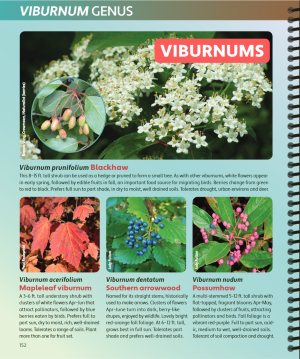
The Maryland ecoregion guides offer more than just plant lists. For example, the Piedmont guide features educational articles on topics like climate adaptation, debunking common myths about native plants, and the role of assertive natives in combating invasive species. While the featured plant section spotlights over 300 plants, each accompanied by a large photo, details on preferred growing conditions, seasonal interest, a conversational plant description, and wildlife icons indicating which animals they support. Keystone species, plants that play an especially important role in supporting ecosystem health, are highlighted with a yellow star.
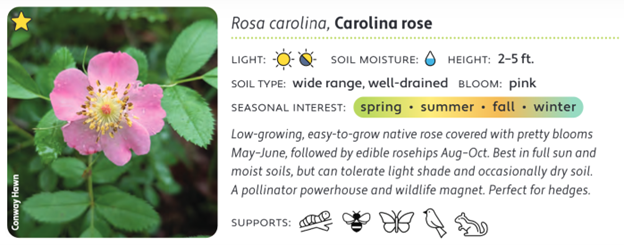
Example of a featured plant from the Piedmont guide.
How to obtain a copy
You can download a free copy of the Piedmont guide (28.1 MB). For those who would also like a hard copy, they’re available for purchase at the following locations:
- MD Native Plant Society’s online bookstore
- Select Extension offices
- Participating nurseries
The cost is $10 per book, or $9 per book for bulk orders (purchased by the box, with each box containing 25 books). What about the other guides? The Coastal Plain guide will be released summer 2026 and the Mountain guide has an anticipated release date of summer 2027.
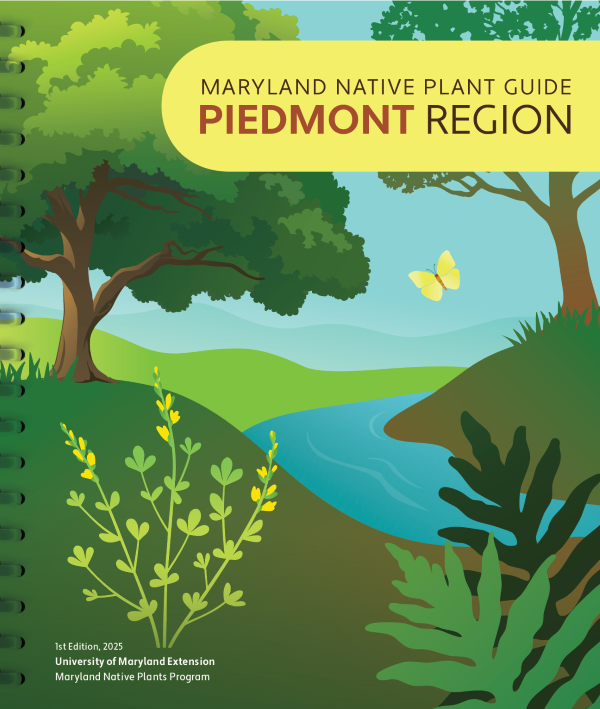
Cover of the Maryland Native Plant Guide Piedmont Region
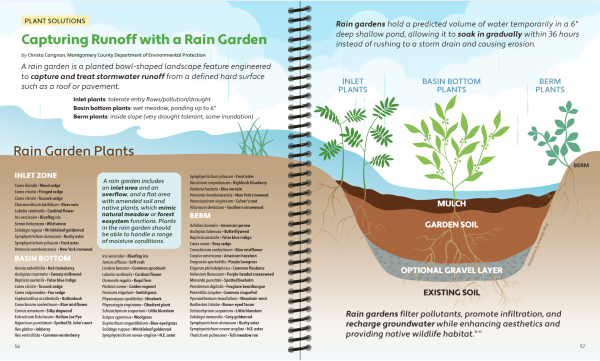
Full color graphics make this guide engaging and educational
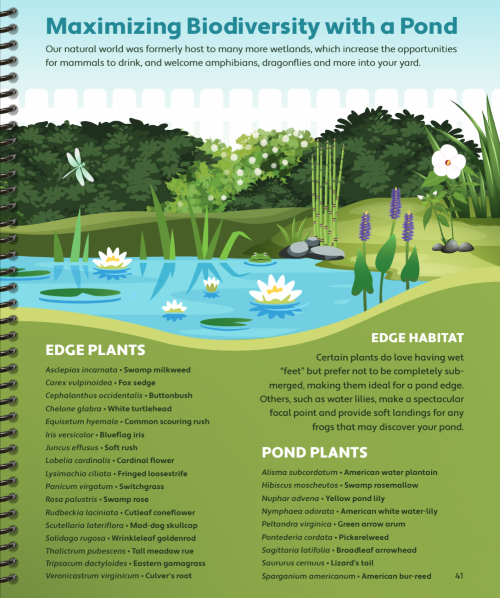
Looking to purchase plants featured in the guide?
It’s frustrating to find the perfect plants for your project, only to discover that they’re unavailable. To help alleviate this issue, the guides exclusively feature plants from the MD Commercial Native Plant List. This list is compiled from the inventories of nurseries participating in the MD Department of Agriculture’s Best Native Plant Certification program. Since the program’s launch last April, more than 30 wholesale and retail nurseries have already been certified. To locate a certified retailer near you, be sure to explore the certified retailer’s list and interactive map. If you’re planning a project that requires a large and/or diverse number of native plant species, consider talking with growers early in the design process.
More native plant tools coming soon
Computer Science students at UMD are transforming the MD Commercial Native Plant List mentioned above into an easy-to-use database, a resource that will also serve as the foundation for an interactive plant toolkit. This toolkit will allow users to curate plant collections tailored to their project type, site specifications, and desired aesthetics. Our goal is to equip both stormwater management professionals and gardeners with a highly visual, intuitive tool that is relevant for Maryland and neighboring states with shared ecoregions. A prototype of the database will be released late spring 2026. The plant toolkit is in the early stages, so stay tuned.
We want your feedback!
The tools we’ve discussed are constantly evolving. Through an iterative process of planning, designing, implementing, testing, and evaluating, we will refine these tools to best meet your needs. If there are additional native plant resources not mentioned here that would be particularly helpful in your practice, or perhaps specific features you’d like to see in any of the tools discussed, please feel free to email me at lkuder@umd.edu. Your input is invaluable.
In 2026, let’s continue planting our way to a more healthy, sustainable Chesapeake Bay watershed—Go native!
 Lisa Kuder serves as the Native Plants & Landscapes Specialist for the University of Maryland
Extension. Her programs are designed to support both professionals in the horticulture and
landscape industries as well as the general public.