
Blogger Stacie McGraw
June 16, 2026
When I moved into my house just before Thanksgiving twenty-some years ago, I thought I was doing everything right. I didn’t rush into a complete remodel of the yard – I waited until spring had come and gone to see what would emerge in the planting beds around the foundation. I walked the neighborhood, noting what others had planted and then set out to recreate the typical landscape in my own yard. I was armed with enthusiasm, a shovel, and a truck full of plants from the nearest big‑box garden center. I didn’t know a thing about native vs. invasive—I just knew I wanted my new yard to look lush, colorful, and “put together.”
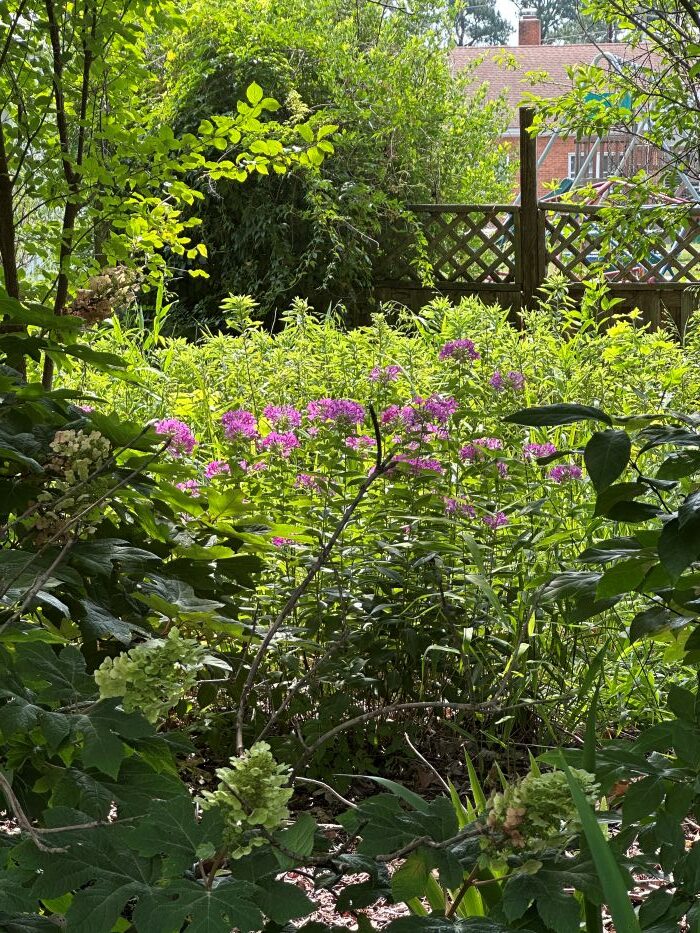
The bright pink of garden phlox stands out against a background of goldenrod in a sunny section of the landscape.
The inventory of plants already on site included ⅔ of an acre of bermuda grass, nandina, half dead azaleas, a small tree I misidentified – that turned out to be Chinese Privet, a Pomegranate bush, a mature Green Ash tree, and three huge Pecan trees. I cut the dead wood out of the azaleas, but left everything else intact and began marking out beds for vegetables, annuals, bulbs, and perennials.
Then I planted. And planted. And planted.
Butterfly bush? It was covered in butterflies!
Bradford pear? I expected pears!
Periwinkle? I loved the color and it came highly recommended by a friend!
I was blissfully unaware that I was essentially unleashing botanical warfare in my own backyard. No one at the big box store or the local nurseries offered information about the problems with these plants. No one mentioned native alternatives.
It took years—honestly, more than I’d like to admit—before I started realizing how many mistakes I’d made. That misidentified tree spread seedlings everywhere. The Periwinkle marched across the yard like it had a personal vendetta against open soil. And the Bradford Pear? It lived up to its reputation and I never got any pears.
Several years after starting the yard makeover, I became a Virginia Master Gardener. I started hearing about native plants and all the benefits that come with them. I learned that the plants I’d lovingly installed were invasive – doing more harm than good.
It was humbling and disheartening. I’d started out with good intentions, but taken one wrong turn after another. I’d invested time and money to create a backyard oasis and it was a daunting task to start over. It felt wrong to dig up and throw away healthy plants, but it also felt wrong to keep them.
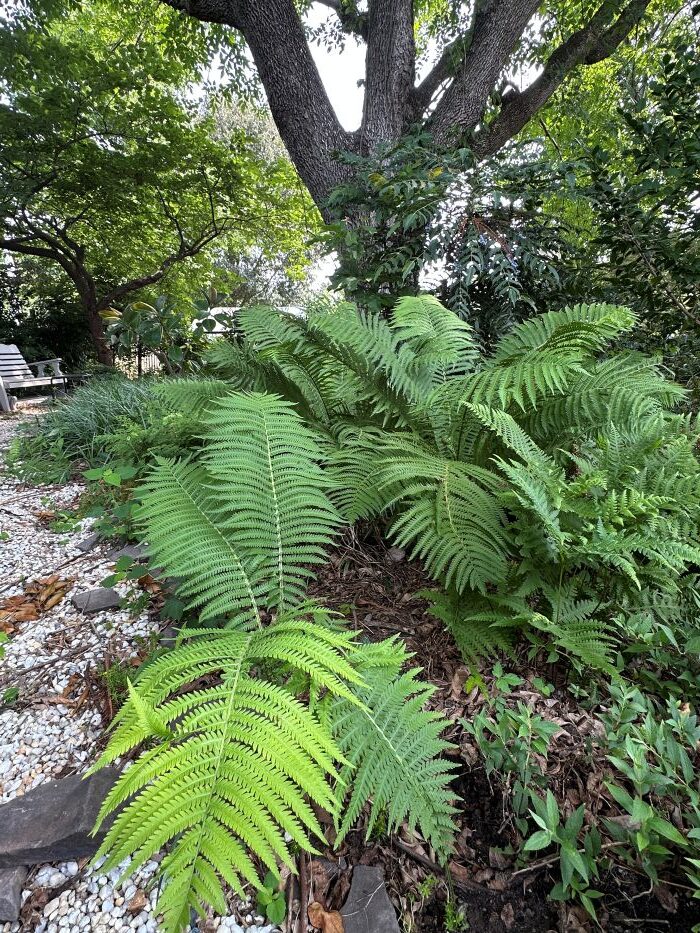
Ostrich fern planted under the Green Ash.
Righting my wrongs wasn’t an easy task. Removing invasives is a sweaty, stubborn, long process. As I worked, I realized that I had more problems than just the plants I had put in the ground. Wisteria had spread from a neighbor’s yard and Honeysuckle was just everywhere along the fence line. Once I knew what to look for, I started to truly understand the problem.
My first native plants were not significantly less problematic than the invasives I had originally planted. I still had much to learn about these plants and which were most suitable for a residential yard. I planted Cutleaf Coneflower and Sea Oats and they immediately took over. Most of my natives came from master gardener and native plant society plant sales in those years. It was nearly impossible to find natives in garden centers.
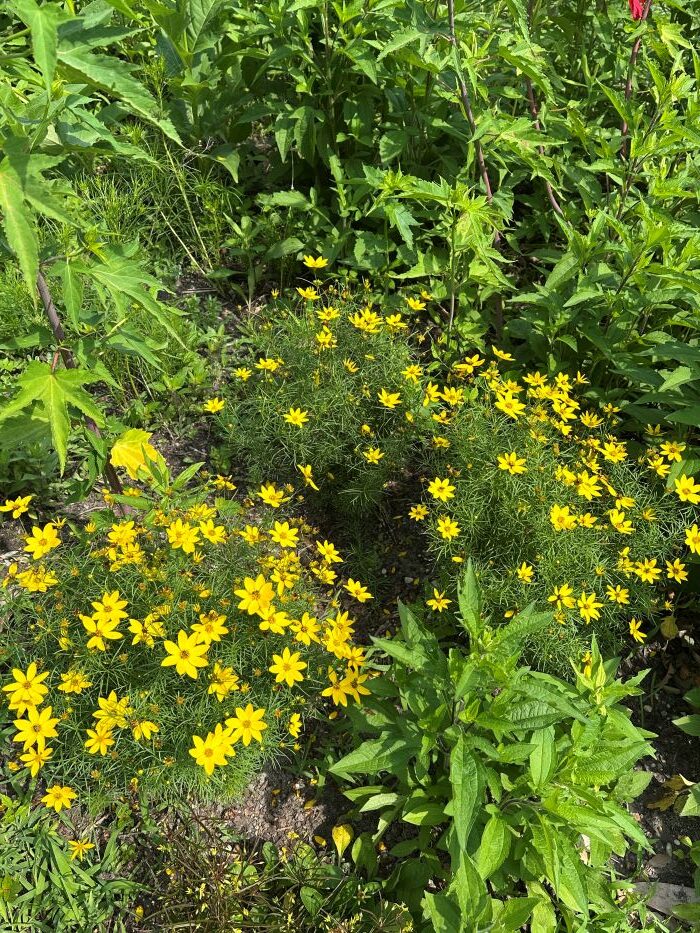
Coreopsis’ sunny yellow blooms mark the start of summer in June.
I stopped planting and started researching, trying to figure out how to do this the right way. I bought books, spent time on websites, and went to the local botanical garden. I still made mistakes, but started to have victories, too. Native trees and shrubs were installed and the insects and birds quickly found them. I was inspired to do more.
Through my involvement with the master gardener program, and later with CBLP and Wetlands Watch, I’ve been able to help others on their native plant journeys. Hopefully, some of my hard learned lessons prevented them from making the same mistakes.
In 2016, more than a decade into this journey,, I finally discovered a resource that was as helpful as it claimed. Native Plants for Southeast Virginia was more than just fantastic photos of plants I couldn’t find or were only native somewhere else in Virginia. It was a curated collection of plants and included information on public sites where I could see them growing. It told me where I might be able to buy them. It made native plant knowledge accessible to anyone who wanted it. I devoured the information in those pages and found that it also gave me direction to find more resources. In 2023, I was offered the opportunity to be part of the movement behind the native plant guides in Virginia. The next year, I convened a committee of plant experts to assist in revising the guide, many of whom had been involved in that original publication. The new guide was published in December 2025, and can be accessed as a free digital download.
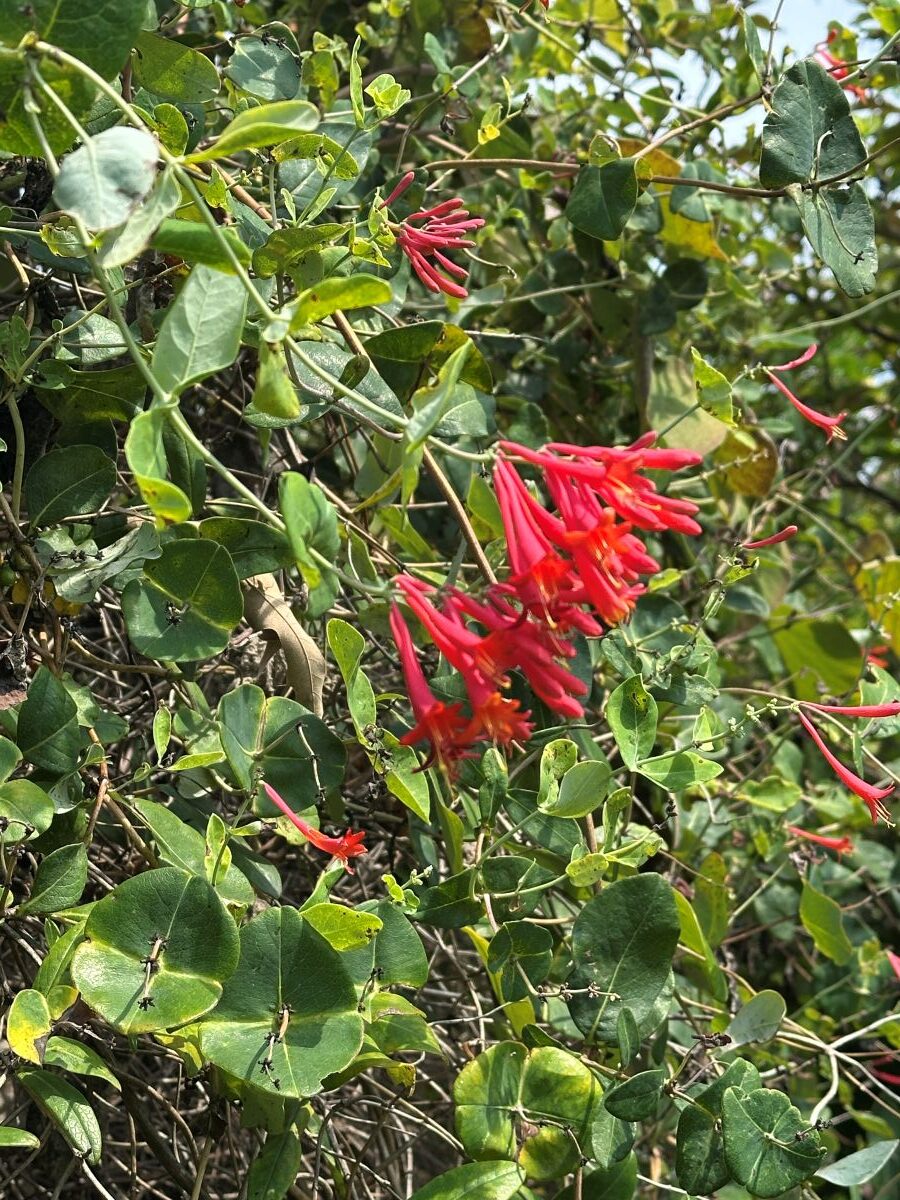
Coral honeysuckle attracts a variety of pollinators including hummingbirds and clearwing moths.
I’ve learned many lessons, but one stands out – this work and the rewards that come from it never end. I’m still learning about plants, both natives and invasives. I’m still fighting Wisteria and non-native Honeysuckle (and English Ivy and Chinese Privet). I also have the privilege of watching hummingbirds flit around the blooms of coral honeysuckle and witnessing baby birds fledge from the nests scattered throughout the oaks, maples, and magnolias that form the backbone of my garden. I spend far fewer hours mowing grass and far more enjoying the life that native plants have brought to my yard. And, I get to spend time with some truly amazing people who are also engaged in this work and I am forever grateful for their willingness to share their knowledge and passion.
 Stacie McGraw is the Director of Operations & Living Infrastructure for Wetlands Watch and the Virginia Director of the Chesapeake Bay Landscape Professional (CBLP) Program. Stacie’s focus areas include living shorelines, CBLP, native plants, invasive plant species, and organizational development. She is a Level 1 Certified CBLP, a Certified Urban Stormwater Professional, Southeast Virginia Regional Co-Coordinator for the Plant Virginia Natives Initiative, and a Member of the Living Shoreline Collaborative Steering Committee.