

Blogger Luis J. Alfonzo
April 22, 2026
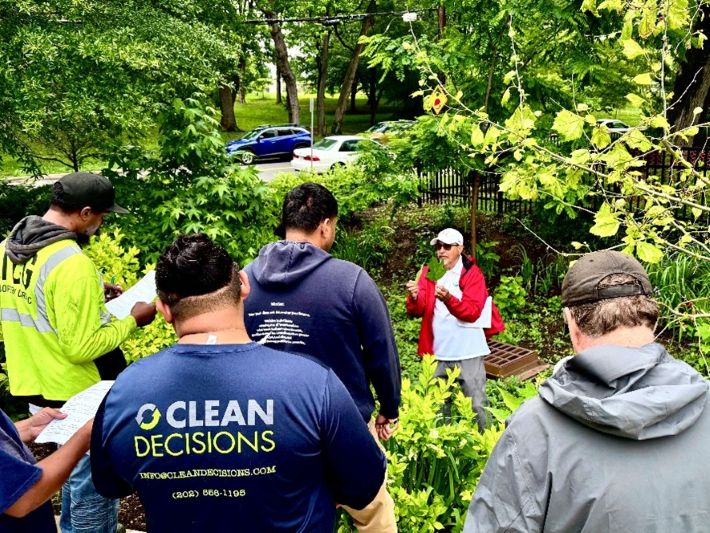
Luis instructing participants in how to inspect a stormwater practice.
I have spent most of my life working with plants and landscapes. As a horticulturist at the University of Maryland Arboretum and Botanic Garden, and with 48 years of experience in the field, I have seen how landscapes can either harm or help the environment. Since 2021, I have also worked with the Chesapeake Bay Landscape Professional (CBLP) program to teach conservation landscaping and green infrastructure, especially to Spanish-speaking landscape crews.
Teaching in Spanish has been one of the most rewarding parts of my career. Since 1998, I have trained Spanish-speaking landscape workers, and through the CBLP program I have continued this work with contractor trainings and crews connected with the District Department of Energy and Environment (DOEE). These sessions focus on practical knowledge—understanding soils, selecting the right plants, managing stormwater, and maintaining landscapes in ways that reduce runoff and pollution.
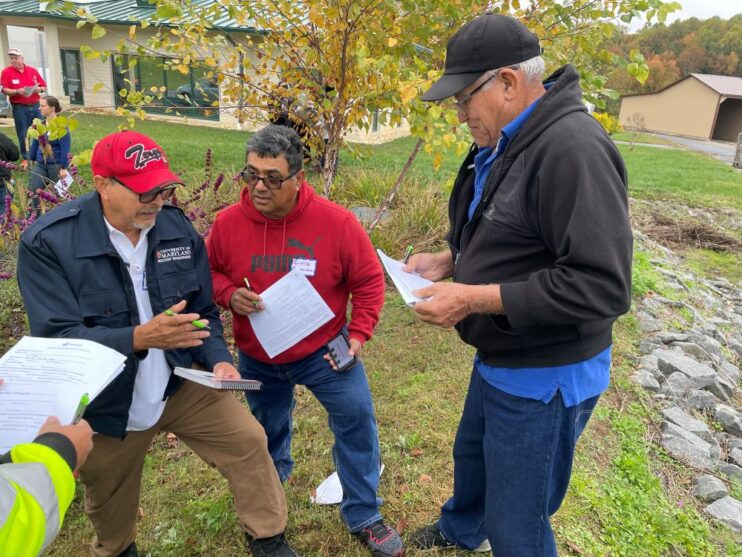
Luis guiding students in the use of their inspection checklists.
One moment from a training really stayed with me. During a class about rain gardens and soil infiltration, one of the crew members raised his hand and said in Spanish, “I have installed many gardens, but nobody ever explained to me why they work.” After we discussed how soil structure, plant roots, and water movement all work together, he smiled and said, “Now I understand. This is not just landscaping—it’s protecting the water.”
That moment reminded me how powerful education can be when people have access to it in their own language.
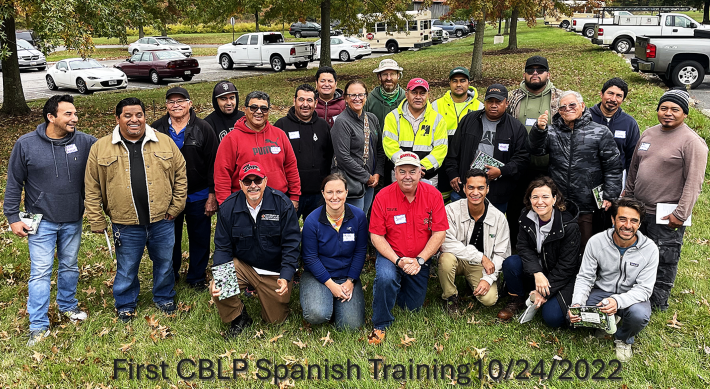
The Spanish-speaking landscaping community is eager to learn. Many workers already have strong hands-on skills and years of experience caring for landscapes. But too often, they have not had access to training opportunities in Spanish that explain the science behind what they do. When they receive that training, the energy in the room changes—people ask questions, share experiences, and quickly connect the lessons to the work they do every day.
Another thing I have learned is how quickly knowledge spreads within these communities. When one crew member learns about native plants, soil health, or proper installation of green infrastructure, that knowledge travels. It moves from one crew to another, from job sites to neighborhoods, and even to family members who work in the same industry.
Conservation landscaping helps protect the Chesapeake Bay because it teaches people how to work with nature instead of against it. By understanding plants, soils, and water, landscape professionals can reduce pollution, capture stormwater, and create healthier ecosystems. Programs that provide practical training are essential today, especially in diverse communities where language can sometimes be a barrier to learning.
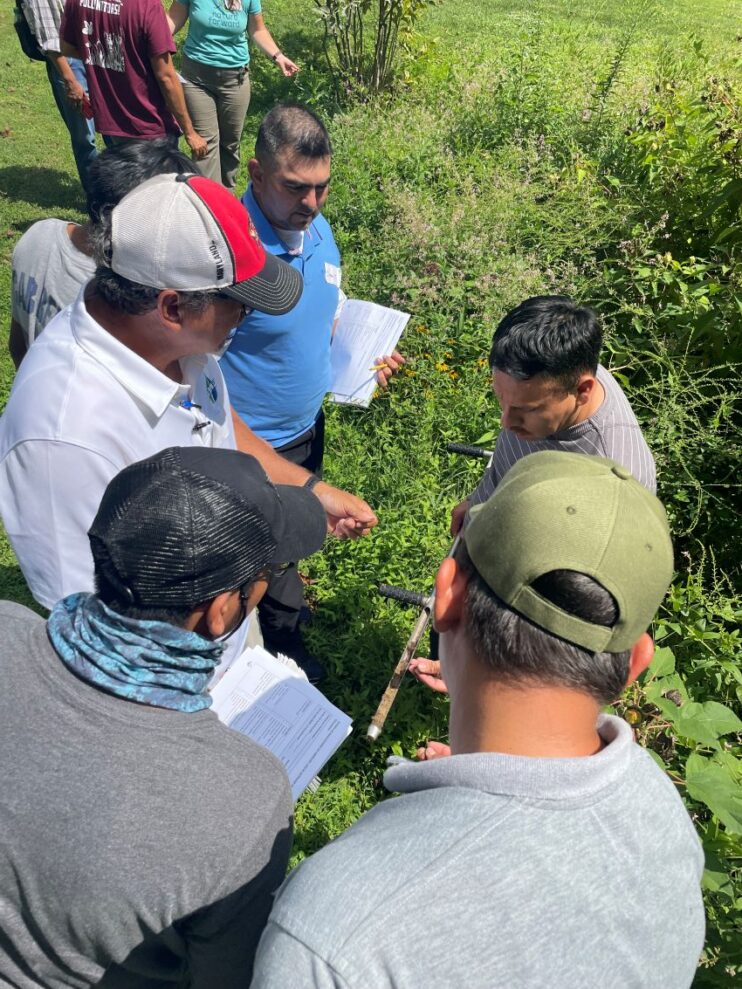
Stormwater BMP’s require a specific type of soil- here Luis shows participants how to take a soil sample and evaluate it by hand
For me, helping share this knowledge has been a privilege. I enjoy supporting these crews, learning from their experiences, and working with programs like CBLP and the Chesapeake Conservation Landscaping Council to expand education in our region.
“When people understand how landscapes work, they don’t just maintain them—they become stewards of the land and protectors of the Chesapeake Bay.”

Luis Alfonzo is a horticulturist with 48 years of experience in landscaping. Since 2007, he has managed a quarter of the 1,300-acre Arboretum and Botanic Garden at the University of Maryland. Since 1998, he’s also trained Spanish-speaking landscape crews and has worked with CBLP since 2021 to educate the Spanish community about stormwater management.