
Blogger Emily Seamster
October 28, 2026
Backyard Buffer Safari
Have you always wanted to have one of those hidden wildlife cameras to catch glimpses of the critters passing through your property but you’ve never seen enough to justify having one? A well-established riparian buffer could help! Trees and other vegetation provide habitat, food, and protection for all kinds of wildlife. This is especially critical near sources of water. Species including coyote, bats, deer, turkeys, raccoons, rabbits, groundhogs, porcupines, and many more are suffering from the effects of dwindling habitat.
Think of habitat as the base of an ecosystem. Everything else in an ecosystem stems from the type and condition of habitat present. The habitat determines the kinds of living creatures that will choose to be there. A rich biodiversity of plants in your buffer will likely result in the same rich biodiversity of wildlife.
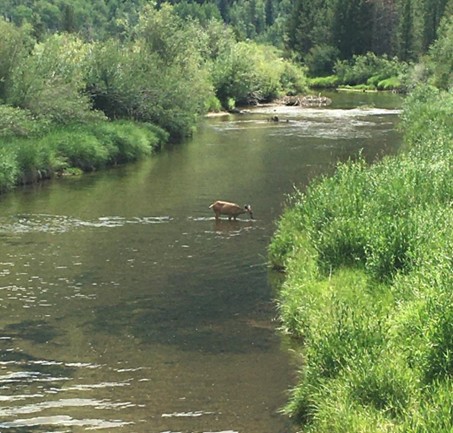
The riparian ecosystem pictured here is filled with birds and mammals of all kinds who love to stop by for a drink from the creek.
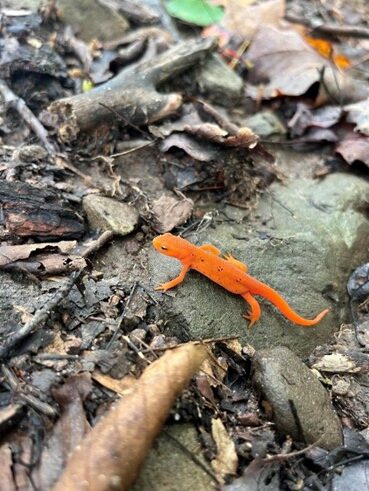
Salamanders are very sensitive to water quality conditions, meaning they can only survive in healthy riparian environments with lots of shade and available oxygen. Their permeable skin makes it easy to absorb toxins from their surroundings.
It’s a Win-Win (well, not for the mosquitoes)
If you are having issues with flooding or standing water, riparian buffers can also help with that. Plant root systems help water percolate into the ground along the root channels. Vegetation takes up space on the land, which spreads flood waters out onto the landscape, reducing the concentration of water in any one spot and bringing peak flows of the stream channel down. If you have a distinct flood plain on your property, the buffer width should at least correspond to the width of the flood plain.
Reducing standing water results in fewer mosquitoes. You know what else reduces mosquitoes? Other bugs that like to eat mosquitoes, and buffers attract critters that like to eat mosquitoes by providing habitat for them. You can plant native mosquito-deterrent vegetation to combat your mosquito problem from multiple angles. Specific plants native to North America that have been demonstrated to offer effective mosquito control include American Beautyberry, Sweetfern, Wild Geranium, Horsemint, Mountain Mint, Eastern Red Cedar, and Joe-Pye Weed. Try incorporating some of these species into your buffer design.
Even More Bang For Your Buck
There are also opportunities to bring in some extra cash just from what you can grow on your property.
For example, harvesting mature timber. You may be thinking, well isn’t the point of a riparian buffer not to cut the trees down, and the answer is yes. What we are talking about here though is sustainable, selective harvesting. You can use responsible forest management practices on your land to select valuable trees to be harvested for profit once they reach a certain maturity. This often involves taking only a portion of trees dispersed throughout the area, thinning the stand to allow younger trees to mature faster and grow larger than they would have in a dense stand of forest. Thinning your stand at the perfect time with selective harvesting provides more sunlight, water and nutrients to younger trees without sacrificing water quality benefits.
Different localities have different rules and restrictions on timber harvesting in riparian zones. Consult with your local watershed authority and land use specialists to learn more about the specific regulations on timber harvesting for your property and how you can structure your project to meet your financial goals as well as your conservation goals.
Conservation and economic goals can also be met by designing your buffer to include agriculturally productive crops. This requires an understanding of what kinds of crops will be able to grow and thrive in the specific conditions of your site. Buffers can be divided into zones based on the proximity to water, drainage characteristics of the soil, slope, shade, and more. These zones correspond to the types of vegetation that will be best suited to the regime in a specific zone. Crops that can be grown and harvested for profit within your buffer include flowers, ornamental stems like Redtwig Dogwood, perennial fruits and vegetables, nuts, alfalfa, hay, medicinal herbs, and crops that can be processed to create dyes, rope, tinctures and more.
Consult with an agroforestry or permaculture specialist, or a sustainable landscape designer to help you design a buffer that meets your ecological and economic needs.
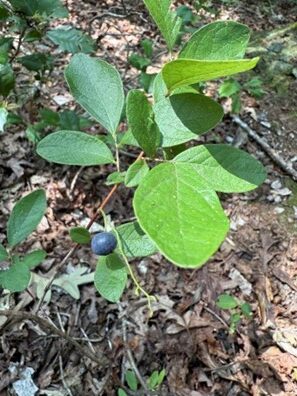
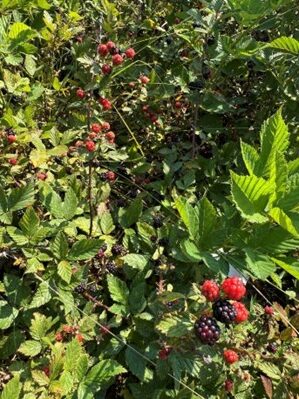
Blueberries and raspberries are native to many areas in the Chesapeake Bay watershed and beyond. They also make great snacks.
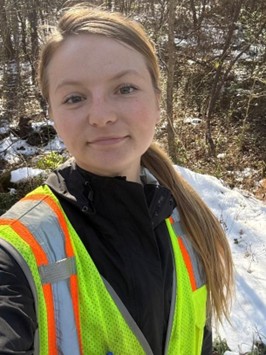 Emily Seamster is a Chesapeake Bay Watershed native, born and raised in Richmond, Virginia. She spent much of her free time as a kid enjoying the outdoors, hanging out on rocks and swimming in the James River. Later, those passions transferred ti her interest in stewardship of the environment as a career path. She earned her bachelor’s degree in environmental science at the University of Virginia. She has worked for a trail crew , improving access to conserved public lands, a wildland firefighting crew where she learned about forest management and fire suppression techniques in the backcountry, and in a summer camp where she led a program educating children on native flora. Emily has nor been with Schnabel Engineering for 3.5 years as an environmental scientist, where she specializes in stormwater management and wetlands. She likes to spend her free time whitewater kayaking and going on adventures with her dog, Charlie. Emily serves on the CCLC Board of directors.