
Blogger Emily Seamster
October 29, 2026
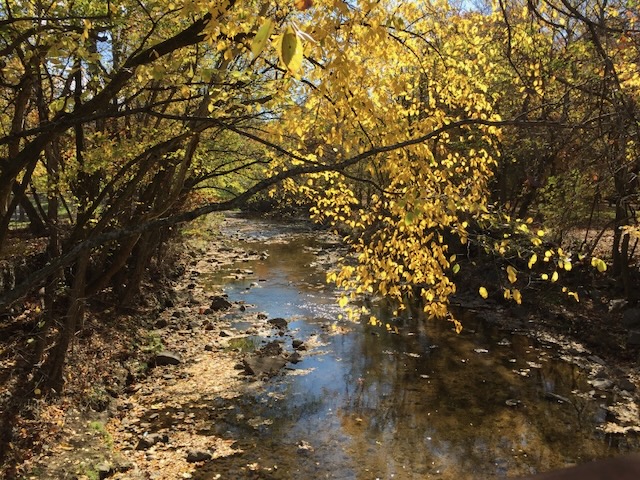
PH: Shereen Hughes
For examples of buffer success stories, check out the James River Buffer Program. This program has successfully installed riparian buffers in flood-prone areas, resulting in improvements to flood mitigation, demonstrating the effectiveness of riparian buffers. This program covers 100% of project costs for eligible landowners in the James River watershed. That’s right, you wouldn’t have to spend a single dime. You can visit their website to learn more about specific projects and how you could potentially qualify for the program if you live near any tributaries to the James River.
Other programs like the Delaware Buffer Incentive Program can also fully cover the cost of projects on private land, including maintenance plus an additional one-time incentive payment based on the type of buffer.
Maryland’s Conservation Buffer Initiative https://mda.maryland.gov/resource_conservation/Pages/conservation-buffer-initiative.aspxoffers incentive payments for farmers to plant buffers on their property by covering the costs of installation plus offering additional one-time incentive pay per acre and an annual maintenance stipend. Another highlight of this program is that you can get paid just for keeping buffers that you already have on your land, so you may already qualify for some of this money without having to do anything except fill out an application.
If you are a resident of Pennsylvania, the PA Department of Conservation and Natural Resources Community and Watershed Forestry Program provides financial assistance for design, installation, and establishment of riparian forest buffers, conversion of lawn to habitat, and community tree planting.
You may qualify for the Conservation Reserve Enhancement Program (CREP). If you are a rural landowner with idle land, pasture or cropland that is within 180 feet of a stream, pond, lake, or wetland and you qualify for this program, CREP will reimburse up to 100 percent of the installation cost and provide an additional annual payment for the length of your contract with them. Check out the Chesapeake Riparian Forest Buffer Network’s “Fund Your Buffer” tab on their website https://chesapeakeforestbuffers.net/fund/ for a more extensive list of funding opportunities in the Chesapeake Bay watershed.
Now, the question to ask yourself is… what’s holding you back?
The Chesapeake Bay is the largest estuary in the United States, fed by seven major tributaries and numerous smaller tributaries to those. These tributaries combined contribute 51 billion gallons of water to the Bay each day. Delaware, Washington D.C., Maryland, New York, Pennsylvania, Virginia, and West Virginia all have tributaries in their states; the watershed is vast to say the least. We all have a part to play in making sure the Bay can continue to support the 18.5 million people that rely on it and the significant impact it has on the economy. If you are outside of the Chesapeake Bay watershed, you can still have a positive impact on your local watershed; the benefits we’ve discussed here remain the same.
By implementing a riparian buffer on your property, you can do some good for the collective while doing well for yourself practically and financially.
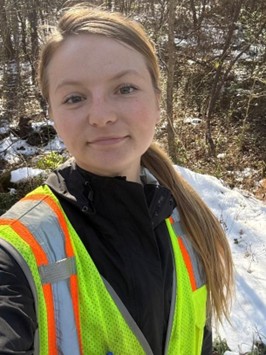 Emily Seamster is a Chesapeake Bay Watershed native, born and raised in Richmond, Virginia. She spent much of her free time as a kid enjoying the outdoors, hanging out on rocks and swimming in the James River. Later, those passions transferred ti her interest in stewardship of the environment as a career path. She earned her bachelor’s degree in environmental science at the University of Virginia. She has worked for a trail crew , improving access to conserved public lands, a wildland firefighting crew where she learned about forest management and fire suppression techniques in the backcountry, and in a summer camp where she led a program educating children on native flora. Emily has nor been with Schnabel Engineering for 3.5 years as an environmental scientist, where she specializes in stormwater management and wetlands. She likes to spend her free time whitewater kayaking and going on adventures with her dog, Charlie. Emily serves on the CCLC Board of directors.